Tenrikyo began in nineteenth-century Japan through the revelation received by Nakayama Miki, later honored as Oyasama. Today, it stands as one of the best-known Japanese new religions and continues to speak to people looking for faith, service, and a stronger sense of human connection.
When people ask about modern developments and reform in Tenrikyo, the answer is not about a break from the past. It is about how a religious organization has maintained its teachings while adjusting its structure, public work, and global mission in modern times.
At the center of Tenrikyo teachings is the idea of the Joyous Life. In Tenrikyo, God the Parent, also known as Tenri-O-no-Mikoto, desires the salvation of all human beings. The faith teaches that people live fully when they help one another, reflect on the use of the mind, and take part in acts of service. That foundation has remained steady. What changed over time was the way Tenrikyo manifests itself in society, organizes its institutions, and expands across Japan and the world.
From Nineteenth-Century Japan to a Modern Religious Movement
To understand reform in Tenrikyo, it helps to begin with its historical development. The faith emerged in the late Edo period and grew during the Meiji period, a time when Japan was undergoing rapid state formation, social change, and new ideas about religion and public order.
In that setting, Tenrikyo developed from a local movement into a larger Tenrikyo church network with a wider following. Scholars often place it among Japanese new religious movements because it emerged in modern Japan, offering a fresh religious path rooted in revelation, healing, prayer, and salvation.
Still, its rise was not simple. During the Meiji period, Tenrikyo sought legal recognition in a system that favored older religious groups. To gain protection and continue its missionary work, it accepted classification under Shinto structures, even though its own doctrine and sacred life were distinct. This decision shaped its early public image and set the stage for later reform efforts.
State Pressure and the Need for Reform
One of the most important chapters in modern developments and reforms in Tenrikyo came from outside pressure. Before and during World War II, the Japanese state tightened control over religion. Like other religious movements, Tenrikyo had to respond to government demands.
In 1939, under threat of suppression, the Tenrikyo Church Headquarters revised its doctrine and ritual practice. Parts of its scripture tradition were restricted, and the Kagura Service could not be performed as usual. Public teaching had to follow a state-approved doctrinal form shaped by State Shinto priorities.
This period matters because it shows that reform in Tenrikyo was not initially driven solely by internal debate. In part, it was forced by law and politics. That is a major point in the study of modern Japanese religion.
Many religious groups in Japan had to redefine their place under modern state power. Tenrikyo’s case is one of the clearest examples of how doctrine, practice, and religious identity were reshaped during a difficult period in Japanese history.
Postwar Restoration and Doctrinal Recovery
After World War II, Tenrikyo entered what it calls a “restoration.” This was one of the most meaningful reforms in its history. The movement republished its major scriptures in full, including the Mikagura-uta in 1946, the Ofudesaki in 1948, and the Osashizu in 1949. It also revised its doctrine to more clearly reflect the teachings of the spiritual leader Oyasama, rather than the language required under wartime state control.
This postwar period was not a reinvention of Tenrikyo. It was a return to its own source. That distinction is important. The movement did not abandon its belief in divine wisdom, the Joyous Life, or universal salvation. Instead, it tried to present those teachings in a form that was faithful to its sacred roots and more open to life in a modern religious society.
Recent academic work also describes Tenrikyo as a transnational religious organization that, after the postwar constitution, renewed its independence and refocused on service and the teachings of its foundress.
Institutional Growth in Modern Times
Another major area of development is institutional life. The Tenrikyo Church Headquarters in Tenri City became more than an administrative center. Over time, the movement built a wider religious and social presence through the Oyasato-yakata complex, education, healthcare, and training centers. Construction on Oyasato-yakata began in 1954 as part of a long-term vision for the Home of the Parent. It includes facilities linked to worship, study, lodging, and public service.
Education also became a visible part of Tenrikyo’s modern identity. Tenri Seminary trains ministers, and Tenri University Corporation manages schools from kindergarten through university. These institutions aim to prepare people to contribute to society in Japan and overseas while staying grounded in Tenrikyo teachings. That shows how the religion has tied faith to public responsibility rather than to private belief alone.
Healthcare and social welfare are part of this same pattern. Tenrikyo’s social welfare work includes foster care support, blood donation drives, care for people facing illness, and service in facilities serving an aging society. Its healthcare institutions grew from efforts to relieve human suffering while keeping the teachings as their fundamental basis. In modern society, this service-minded approach has become one of the clearest expressions of Tenrikyo in action.
Global Mission and Overseas Development
 Modern developments and reforms in Tenrikyo also include its global reach. The movement opened churches overseas before the mid-twentieth century, and its overseas mission expanded further after the war. Official history notes that the Overseas Mission Department, now called the Tenrikyo Overseas Department in English sources, was re-established in 1952. Mission headquarters and centers later opened for Tenrikyo members in Hawaii, Brazil, New York, Paris, Hong Kong, Thailand, and Singapore.
This matters because Tenrikyo is no longer only a Japanese religion in a narrow sense. It remains deeply shaped by Japan, Tenri City, and its sacred center, yet it has also become part of a wider world of religious movements. Recent scholarship describes it as active across at least fifteen countries and notes the growth of a distinct Tenri culture tied to pilgrimage, public service, and community institutions.
What Has Stayed the Same
For all these changes, the heart of Tenrikyo has stayed consistent. Its doctrine still centers on God the Parent, the salvation service, the Sazuke or Divine Grant, and the teaching that the body is a thing lent, a thing borrowed. It still teaches self-awareness, gratitude, and the duty to help others. The religion’s modern development has not erased its original faith. It has given faith new ways to serve people in society.
That is why reform in Tenrikyo should be seen as a balance of continuity and change. The movement has responded to modern Japan, state control, postwar freedom, and global expansion. Yet, it still points people back to the same hope that shaped its beginning: a Joyous Life shared by all humanity. For those interested in religion, Japanese history, and the growth of new religious movements, Tenrikyo offers a strong example of how a faith can adapt in form while holding to its truth in practice and belief.
A Living Faith for the Modern World
The story of modern developments and reform in Tenrikyo is the story of a faith that faced pressure, recovered its voice, and built new paths for service in the modern world. From nineteenth-century roots under Nakayama Miki to postwar restoration, institutional growth, and overseas mission, Tenrikyo has continued to present its teachings through worship, public service, and community life.
For people seeking a deeper understanding of Tenrikyo, its history shows that true reform does not always mean leaving the past behind. At times, it means returning to the source with greater clarity and purpose.
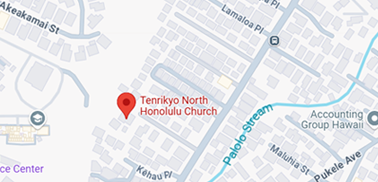
To learn more about Tenrikyo North Honolulu Church and how these teachings continue to speak to life today, get in touch with us.