
Tenrikyo Hinokishin Service (The Concept and Practice of Voluntary Acts of Gratitude)
Hinokishin is one of the most recognizable expressions of Tenrikyō faith, yet many people first encounter the word without fully understanding its depth. It is often described as “voluntary service,” but the idea reaches far beyond simple volunteering or community work. Hinokishin is a way of turning gratitude into motion. This involves using the body, voice, and everyday moments to express thanks through action rather than just words.
This practice does not require special training, a certain title, or even a formal setting. Anyone can take part, and any sincere act can qualify. What matters is the intention behind it: a willingness to give back because life itself is received as a blessing, and the body is understood as something entrusted to us. Through this lens, even ordinary tasks become meaningful, and service becomes a path toward shared happiness, rather than personal gain.
This article explores what hinokishin means, its connection to core doctrines such as kashimono-karimono (a thing lent, a thing borrowed), how it is practiced by Tenrikyo followers, and its relationship to the goal of the Joyous Life.
What is Hinokishin?
In Tenrikyo usage, hinokishin refers to voluntary effort—acts done with joy, gratitude, and a selfless heart. One official source states:
“Hinokishin is any action arising from the deep realization that life is bestowed on the human body through the complete providence of God.”
In other words, because our human body is given to us, we respond by offering our time, energy, resources, or kindness in return. Something like: cleaning a park, helping a neighbour, giving a smile all become meaningful.
This also reflects that such an action is ideally done as an act of religious devotion, out of a wish to help or bring joy to others, without any thought of compensation. The term itself (日の寄進) may be literally translated as “daily contribution” or “repayment each day,” reflecting the attitude that gratitude is not occasional but an integral part of life.
In sum: hinokishin is more than volunteering; it is a spiritual posture of gratitude, rooted in the belief that one’s body is a gift from God and should be used to bring joy and light to others.
Doctrinal Foundations: Kashimono-Karimono, Mental Dust, and the Human Body
To understand Hinokishin fully, a quick look at some Tenrikyo core doctrines helps.
1. Kashimono-Karimono (A Thing Lent, a Thing Borrowed)
One of the central teachings in Tenrikyo is kashimono-karimono. This phrase expresses that the human body is not ours by right—it is a thing lent from God the Parent (Oyagami), or in Japanese, a thing borrowed. This idea invites humility, gratitude, and a sense of duty. When a believer realizes their body is borrowed, then hinokishin naturally flows: the body isn’t simply for personal use, but for offering thanks through action.
2. Eight Mental Dusts
Another doctrinal point: Tenrikyo teaches that human beings accumulate “mental dusts” (such as arrogance, envy, jealousy, and greed). These are obstacles to living the Joyous Life. Hinokishin plays a role in “sweeping away” this dust by shifting attention from self-centered desire to outward service and gratitude.
3. The Human Body and Salvation
In Tenrikyo thought, human salvation is linked to properly living the body given, harmonising with God’s nature, and participating in God’s blessings. The body is the instrument for both receiving and offering. Hinokishin is thus not peripheral. It is integral to the purpose of life as Tenrikyo teaches.
4. Divine Blessings and God’s Nature
Because God the Parent gives countless blessings, the believer’s response of hinokishin is an acknowledgment of that providence. One teaching states:
“As our perception of the divine blessings in every event grows keener day by day, our gratitude to God the Parent comes to be expressed in our attitude and in our actions. This is taught by God the Parent as Hinokishin.”
This is why Hinokishin matters not just for others, but as a lived relationship with God’s providence.
How Hinokishin Is Practiced

What does this look like in everyday life among Tenrikyo followers and local churches?
- Any form of action: Hinokishin is not restricted to church-helping tasks alone. It can range from bearing straw baskets, cleaning spaces, helping neighbours, to simply offering one’s time with joy for others.
- Youth and association activities: Groups like the Tenrikyo Young Men’s Association and Tenrikyo Women’s Association engage in organised hinokishin activities (service projects, community help, etc. ). This transmits life values, social skills, and a sense of belonging in the community.
- Relation to the service and rituals: Though hinokishin is separate from the liturgical services (such as the Mikagura‑uta sung service), it connects deeply. The scriptures highlight living out the faith in daily life, not just through ritual. For example, the Mikagura-uta emphasises sweeping away evils and living in harmony with God’s providence.
- Attitude of action: Spontaneous action, joy, no thought of compensation, and sincerity are some of the key attitudes.
Why Hinokishin Matters: The Joyous Life and Community
Living the Joyous Life
In Tenrikyo, the ultimate spiritual goal is the Joyous Life (陽気ぐらし yōkigurashi), a way of living grounded in gratitude, mutual help, and harmony with both God and our fellow human beings. Hinokishin is one of the most practical expressions of this ideal. Through selfless action, we offer our bodies, “a thing borrowed,” back to God as a gesture of appreciation for the divine grant of life itself.
In this sense, hinokishin is not just work or volunteering; it is a joyful form of religious practice that allows us to experience happiness through service. The more we joyously accept the circumstances of daily life and act with sincerity, the more that joy naturally returns to us.
Building Community in Local Churches
When local churches, mission stations, or fellowship groups engage in Hinokishin. They strengthen their internal bonds. These peer-to-peer acts of service create shared purpose and trust.
This reflects the Tenrikyo tradition of faith, rooted not only in prayer or doctrine, but also in visible, compassionate action. Instead of an individualistic spiritual path, believers cultivate a community built on mutual aid, kindness, and responsibility. Many Tenrikyo churches continue this spirit alongside their monthly services, making hinokishin a natural extension of worship.
Connection to Human Salvation
In Tenrikyo, salvation is not limited to the afterlife. It is something to be lived and realized here and now, through alignment with God’s intention for humanity. Hinokishin helps remove “mental dust” by turning our attention outward, toward gratitude and service.
The scriptures teach that through the service (tsutome) and daily practices, human beings are guided back to their intended state of purity and joy. This is why Hinokishin is not merely optional, but is considered one of the essential pathways toward true spiritual growth and human salvation.
A Culture of Gratitude and Mutual Aid
Hinokishin nurtures a shift from a mindset of receiving to one of thankful giving. Instead of asking, “What can I gain?” the question becomes, “How can I serve?” This attitude has the power to reshape families, workplaces, churches, and society. It cultivates the very mutual-aid culture that many religious movements hope to inspire, yet in Tenrikyo, it grows organically from the teaching of joyful gratitude.
Even at the broader level, such as the example set by the Tenrikyo Church Headquarters, hinokishin remains a living reminder that faith is something practiced with the body, not just believed in the mind.
Practical Suggestions for Participation
If you or your community wish to participate in or promote hinokishin, here are some concrete suggestions.
Individually
- Reflect on the statement “my body is a thing borrowed,” a core insight taught by Miki Nakayama (Nakayama Miki), and ask: How can I use this day, this hour, or this body to bring joy to someone else?
- Choose one small act this week: cleaning a shared space, helping someone carry something, offering time to a neighbor, without grudge-bearing, expectation, or reward.
- After the act, pause and notice: Did you feel joyous acceptance, gratitude, or a quiet sense of connection?
These reflections are like a seed sown, nurturing the heart of a reborn person who serves naturally.
In Groups / Local Church Settings
- Pick a community service project (cleaning, gardening, helping a neighbour). Emphasize the spirit of selfless joy, not obligation, as taught in the Divine Directions.
- Afterward, share stories. What did participants notice about themselves, about others, about living as a “body borrowed”? These moments are a kind of timely talk, a spiritual “check-in,” much like the seated service in which hearts align before action.
- Connect the experience to peer-listening circles or initiatives like “Finding Our Way Together,” where participants support one another through reflection, gratitude, and unforced spiritual growth.
For Families or Caregivers
- Encourage children or youth to try simple acts, such as helping a sibling, cleaning without being asked, or offering kindness at school.
- Use these moments to teach self-love grounded in gratitude, not a self-centered love, but one that flows outward into service.
- Make it fun and celebratory. Hinokishin is not a chore, but an openly revealed path toward new life and joyful living.
In Community / Workplace Environments
- Embed a weekly “service moment”: one voluntary act of help among colleagues, offered with no tallying of reward.
- At gatherings, share a short reflection, perhaps a verse from the Mikagura Uta VII or XI, which celebrates spirited action and mutual happiness. And invite one or two people to commit to a Hinokishin act that week.
- Frame it as mutual aid, not charity. Everyone benefits, everyone grows, and everyone participates in shaping a joyous life that leads toward the promised time when all feel supported.
Overcoming Misconceptions
When introducing hinokishin in a community setting, it’s helpful to address potential misunderstandings.
Misconception 1: “I’m not a minister or church official, so I can’t do hinokishin.”
Clarification: Hinokishin is open to all — rich or poor, young or old — as long as the motive is genuine and the heart is joyful.
Misconception 2: “It has to be big or public to count.”
Clarification: Any act counts. Even a smile, an encouraging word, or a cleaned desk can be hinokishin. It is the spirit, not the size, that matters.
Misconception 3: “Is this a substitute for professional help?”
Clarification: Hinokishin is a spiritual and community act. It is not therapy. For emotional or psychological crises, professional help remains important.
Misconception 4: “If I do hinokishin, I’ll be praised or get a reward.”
Clarification: The teaching emphasises no thought of compensation or reward. The act arises from gratitude and service.
How Hinokishin Aligns with the Vision of “Finding Our Way Together”

For a group focused on building community, the concept of hinokishin offers a powerful underpinning. Consider these links:
- Safe Space: Hinokishin fosters respect and kindness, essential for a safe, vulnerable-friendly environment.
- Peer-to-peer connections: When participants undertake acts of gratitude together or share their experiences, they build mutual bonds.
- Authenticity and vulnerability: Reflecting on one’s body as borrowed and choosing to serve from that stance invites authenticity, not perfection.
- Community building: As members act together (in-person or virtual), the web of connection grows. Stories of small acts can inspire others.
- Spiritual depth without therapy: Hinokishin provides meaning and practice, while clearly not claiming to be therapy. It supports emotional well-being in a faith-based way without replacing professional help.
Bringing It Home: An Invitation to Reflect
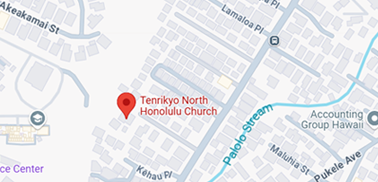
Imagine a caregiver in transition, feeling isolated and overwhelmed. They join a listening circle at the Tenrikyo Church in North Honolulu. They hear peers share about small acts of service. Someone helped their neighbour carry groceries, another cleaned up a park bench, and another sent a heartfelt note.
Inspired, our caregiver volunteers brought water bottles to a local community garden day. They feel a shift: they are seen, they are doing something of value, their body is in motion in gratitude rather than stuck in worry. They realize: “My body is borrowed, and using it this way matters.”
Now imagine the group meeting again and sharing how that service made them feel, what dusts they felt clearing (perhaps resentment or isolation), and how connecting to another peer gave them support. That’s the communal cycle of Hinokishin: act, reflect, share, connect.
By inviting your community into such stories, you ask them into Tenrikyo’s living tradition and your local safe-space mission: building “Finding Our Way Together,” one voluntary act of gratitude at a time.
Living Gratitude Through Everyday Action
Hinokishin reminds us that gratitude does not have to stay internal. It can take shape in everyday choices, in the way we move through the world, and in how we treat one another. A simple task done with sincerity, a helpful gesture no one asked for, or a shared effort to improve a space. Each becomes a quiet affirmation that life is a gift and relationships are worth tending.
What makes this practice meaningful is not its scale, but its spirit. Every person can participate, every act has value, and every contribution strengthens the sense of community that Tenrikyo hopes to cultivate. As more people adopt this mindset, service stops feeling like an obligation and begins to feel like a natural expression of gratitude and connection.
If you’d like to explore hinokishin in a supportive setting, or you’re interested in participating in gatherings and service opportunities at Tenrikyo North Honolulu Church, we welcome you to reach out. Get in touch with us.