
Theology & Concept of God (Names of God, How Tenrikyo Views Divinity, Theological Development)
Every religion begins with a question about the divine: who or what sustains life, gives meaning, and guides human beings toward goodness. In Tenrikyo, a faith born in 19th-century Japan and rooted in compassion and gratitude, this question finds a distinctive answer. God is not distant, unreachable, or confined to doctrine. God is the Parent of all humanity, constantly nurturing creation and working so that people may live the Joyous Life—a life of harmony, service, and mutual happiness.
In exploring the theology and concept of God in the Japanese new religious movement Tenrikyo, we will cover three related areas. First, we’ll look at the various names of God within Tenrikyo and how they reflect different understandings of the divine. Second, we’ll examine how Tenrikyo views divinity and God’s relationship to human beings, creation, and the world. Finally, we’ll trace key points in the theological development of Tenrikyo (especially in modern Japan).
Names of God: Divine Terms in Tenrikyo
“God the Parent” and Tenri-O-no-Mikoto
One of the central sacred names in Tenrikyo is Tenri‑Ō‑no‑Mikoto (天理王命). This is how God is addressed in prayer, and the name means roughly “Ruler of Heavenly Reason” or “God who governs all with the truth of heaven.”
In Tenrikyo teachings, God is also referred to as “God the Parent” (親神様, Oyagami-sama). This reflects the idea that God is not distant or impersonal, but a caring Parent who created and nurtures all human beings.
Tsukihi (Moon-Sun) and Earlier Names
Before fully embracing the parental language, Tenrikyo uses other metaphors for God. The term “Tsukihi” (月日, Moon-Sun) stands out. In the scriptures, God is described as Tsukihi, meaning that God’s providence is like the moon and the sun: universal, impartial, constant. This term helped early followers understand the divine in a more familiar symbolic language. Earlier yet, God was sometimes called kami (神) in the sense of spirit or deity in the Japanese religious context. Over time, the appellations changed as followers’ understanding deepened.
Sacred Names for Ten Aspects of God’s Providence
In Tenrikyo, the Ten Aspects of God’s Providence (十全の守護 Jūzen no Shugō) describe how God the Parent (Tenri-O-no-Mikoto) manifests divine providence in the world. These aspects explain the workings of nature, the human body, and life itself, expressing that all functions in creation are sustained by God’s living presence.
| Aspect | Japanese Name | Divine Function | Manifestation / Correspondence |
| 1 | くにとこたちのみこと (Kunitokotachi-no-Mikoto) | Support, foundation | Hardness, bones in the body |
| 2 | おもたりのみこと (Omotari-no-Mikoto) | Pulling forth, growth | Pulling up / raising things |
| 3 | くにさづちのみこと (Kunitsuzuchi-no-Mikoto) | Binding, fixing | Joints and connections |
| 4 | つきよみのみこと (Tsukiyomi-no-Mikoto) | Moisture, cooling | Water, bodily fluids |
| 5 | かしこねのみこと (Kashikone-no-Mikoto) | Warmth, fire | Heat, metabolism |
| 6 | たいしょくてんのみこと (Taishokuten-no-Mikoto) | Cutting off, separating | Eating, digestion |
| 7 | くもよみのみこと (Kumoyomi-no-Mikoto) | Growth, nurturing | Lungs, breathing, expansion |
| 8 | かやのひめのみこと (Kayanohime-no-Mikoto) | Formation, molding | Skin, the surface of things |
| 9 | ふとのべのみこと (Futodokoro-no-Mikoto) | Storage, retention | Stomach, accumulation |
| 10 | こうきよくのかみ (Kokiyokunokami) | Breath, movement | Wind, respiration, vitality |
Why the Many Names Matter
Having multiple names helps adherents approach God in various ways: as Creator, as Sustainer, as Parent, as the natural order, and as a daily blessing. Each name anchors a different dimension of divine intention, providence, and relationality. For instance:
- “God of Origin” reminds us of creative purpose.
- “God in Truth” underscores that the world is governed by a divine truth, not random chance.
- “Parent” emphasizes the caring relationship and our personal response to it.
Thus, the names of God in Tenrikyō are carefully chosen to cover both transcendence (God beyond us) and immanence (God with us), and to prompt human beings to recognize divine intention, bless their lives, account for their bodies (which are “a thing lent” or “thing borrowed” from God), and live in alignment.
How Tenrikyo Views Divinity: God, Human Beings, and Creation
 1. The Creator and Sustainer: Divine Will and Providence
In Tenrikyo’s view, God is both transcendent and personal. That means God is above all, the absolute divine being, the creator, and sustainer of everything. At the same time, God is involved in human life and actively working for universal salvation and joyous existence.
God’s providence is described in various dimensions: natural phenomena (sun, moon, water, fire), human bodily functions (eyes, breath, skin), social relations (joining and “cutting off” ties in cosmic terms), and moral life. These show how divine will is present in everyday life.
2. Purpose of Human Existence: Joyous Life
A core Tenrikyo teaching is that human beings were created so that God could share in their joy. The ideal human existence is called the “Joyous Life” (陽気ぐらし, Yōki-gurashi). That is, living in gratitude, mutual aid, kindness, and in harmony with God’s intention. In this view, suffering, illness, anxiety, or misfortune are not divine punishments per se, but are signals that one’s life is not aligned with God’s providence or the natural order.
3. Human Body, Borrowed and Lent
Tenrikyo emphasizes that the human body is a “thing lent” or “thing borrowed” from God the Parent. Our minds may be our own, but our bodies depend entirely on God’s providence. This notion underlines human responsibility: we must use our minds well, cooperate with God’s will, and recognize our dependence.
4. Universal Salvation and Mutual Aid
The theology emphasizes universal salvation: God intends to save all people, not a selected few. The religious movement teaches that human beings must help one another and serve with gratitude, in a culture of mutual aid. This ties into how God works in and through human community.
5. Relationship: God-Human, Parent-Child, Communion
Rather than a distant deity, Tenrikyo presents God as the Parent of all human beings. In prayer and practice, followers speak to God as their Parent. That frames a relational theology: God invites human beings into dialogue, gratitude, service, and joyful living.
6. The Role of Divine Wisdom and Divine Will
Though Tenrikyō does not frequently use the phrase “divine wisdom,” the idea is there: God is “God in Truth,” the source of order, wisdom, and plan. The teaching holds that recognizing divine intention or will leads to alignment with the Joyous Life. In that sense, “divine or spiritual wisdom” and “divine will” are embedded in Tenrikyō’s worldview.
7. Placing Tenrikyo in the Larger Religious Landscape
Tenrikyo is one of the Japanese new religious movements (新宗教, shinshūkyō). It emerged in 19th-century Japan (in Nara Prefecture) under the leadership of Nakayama Miki, known to followers as Oyasama. Being a new religious movement, Tenrikyo shares some features with other faiths’ revelation, modern institutional structure, and social engagement, but its concept of God remains rooted in Japanese religious ideas (kami, providence, parenthood) while also engaging universal themes like salvation, community, and human flourishing.
Theological Development: From Founding to Contemporary Japan
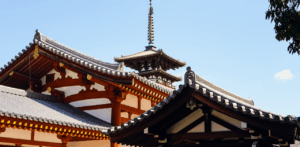 The theology of Tenrikyo began with the revelations to Nakayama Miki in 1838. From that point, through the scriptural texts (Ofudesaki, Mikagura‑uta, and Osashizu), the early Tenrikyo followers were introduced to God’s will, the model of human creation, and the call to live the Joyous Life.
Initially, the understanding of God was more abstract: God as spirit (kami), then as a natural principle (Tsukihi, Moon-Sun). Over time, a deeper relational understanding developed: God as Parent.
Institutional Development & Scholarly Theology
Over time, the organization of Tenrikyo (including the Tenrikyo Church Headquarters in Nara prefecture) began developing theological studies: historical theology, dogmatic theology, and practical theology. In modern Japan, Tenrikyo has engaged in scholarship and published resources (for example, through the Tenri-Ō No Mikoto Institute), and has placed greater emphasis on global outreach through the Tenrikyo Overseas Department.
Post-War Era and Contemporary Japan
In the years following World War II, Japanese new religions, such as Tenrikyo, expanded significantly. Tenrikyo repositioned itself publicly as a religion of world peace, healing, community service, and joyous living. Its theological emphasis on mutual aid, human dignity, and universal salvation aligned well with post-war humanistic sensibilities.
In contemporary Japan and abroad, Tenrikyo is not just a Japanese religion confined to Japan but a global faith with branches overseas. Its theology now includes engagement in educational programs, a modern medical care ethos (as an extension of divine providence in human life), and social contribution.
Theological Themes for Today
Key themes in recent theology include:
- Personal responsibility: Recognizing that our minds are our own and we must choose to align with God’s will.
- Human flourishing: Living the Joyous Life as evidence of divine intention.
- Mutual aid and community: Salvation is a communal, not just an individual, endeavor.
- The body as borrowed: Recognizing our dependence on God in everyday existence.
- Universal salvation: God’s intention is to save everyone; no one is excluded.
Summary & Implications for Faith and Practice
Understanding the theology and concept of God in Tenrikyo invites both reflection and action. On the reflective side, the many names of God in Tenrikyo help believers and inquirers alike to grasp the divine in multiple dimensions: originator, sustainer, parent, natural order, the sun and moon, the functional provider. Each name points to a way we may encounter and respond to divine intention.
On the practice side, Tenrikyo’s theology is not detached from life. It insists on body-mind connection (we borrow our bodies), community support (mutual aid), joyful living (in gratitude and service), and personal choice (using our minds well). The theological development over time has enabled Tenrikyo to be both rooted in Japanese religious culture and outward-looking in the modern world.
For Tenrikyo adherents or those exploring Tenrikyo, the following implications are drawn:
- Recognize God the Parent as accessible and caring.
- Reflect on the ten aspects of providence: how does God work in your body, your relationships, your world?
- Seek to live the Joyous Life: mutual aid, gratitude, service, peaceful existence.
- Understand that theology builds: it began with spirit, moved to moon-sun, then parent, then to communal and global frameworks. So one’s own understanding may grow, too.
- Embrace universal salvation: your spiritual work is part of a larger divine intention.
- Place your body and mind in the context of divine providence: the body is lent, the mind is yours to align with God’s will.
Living the Faith: Why Tenrikyō’s Theology Still Matters Today
In a world often marked by isolation and uncertainty, Tenrikyō offers a framework of care not through fear or guilt, but through connection and joy. The faith reminds us that divine providence is ongoing, that every breath is sustained by the same love that created the world. When believers practice mutual aid and the Joyous Life, theology turns into compassion in motion.
Tenrikyō’s theology also bridges generations. Its teachings, first openly revealed through Miki Nakayama’s writing brush, now guide communities in modern Japan and beyond. As the Tenrikyo Church Headquarters continues its educational programs and overseas work, the concept of God as Parent invites all people, regardless of culture or background, to live with awareness, gratitude, and kindness.
If you want to understand Tenrikyō’s teachings beyond doctrine — to experience the warmth of community and shared purpose, get in touch with us at Tenrikyo North Honolulu Church. Come take part in a service, listen to the teachings, or simply sit with others who seek a Joyous Life.